I am Jain by religion and by profession a UX designer. While growing up, i use to go to gyanshala, there I was taught the principles of Jain philosophy—Ahimsa (non-violence), Aparigraha (non-possessiveness), and mindfulness in every action. Little did I know then how beautifully these principles align with science and modern design thinking. Today, as I navigate the world of digital experiences and business strategy, I see these values not as ancient relics but as timeless guides for creating meaningful, ethical, and sustainable innovation.
As leaders and creators, we face a critical question: How do we design experiences that delight users, uphold ethical principles, and remain mindful of the world we inhabit?
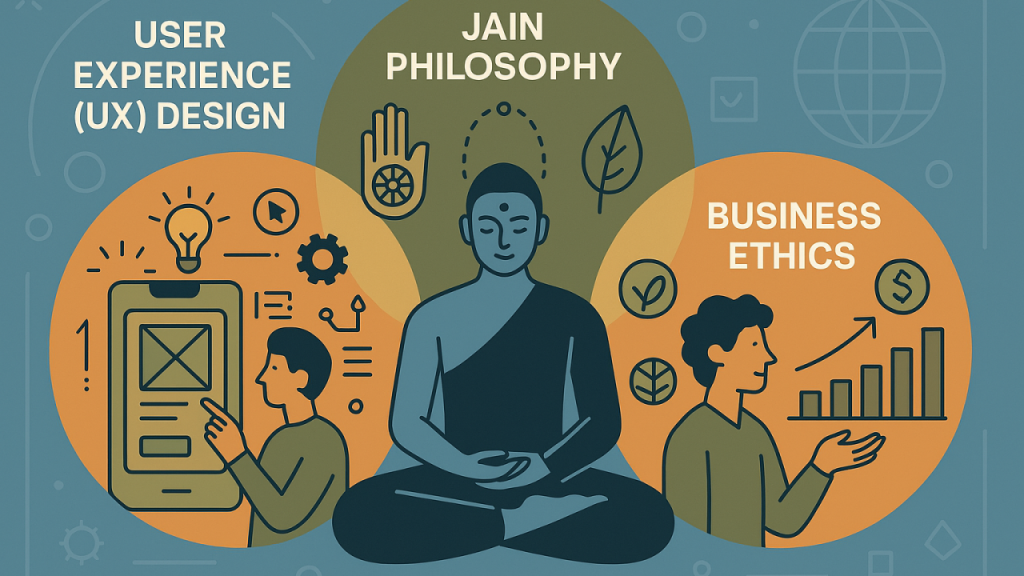
The answer lies in blending three powerful disciplines: User Experience (UX) Design, Jain Philosophy, and Business Ethics—a triad that can guide us toward sustainable success. Let’s understand how —and why businesses should pay attention.
1. Ahimsa (Non-Violence): Design Without Harm
– Ahimsa teaches us to avoid causing harm—not just physically, but emotionally and psychologically.
– In UX, this translates to inclusive design, accessibility, and mental wellness.
How to achieve this-
– Avoid dark patterns that manipulate users (e.g., forced subscriptions or hidden fees).
– Design interfaces that reduce cognitive overload and promote calm.
– Respect user privacy and data autonomy.
Business Impact:
– Ethical design builds trust, reduces churn, and enhances brand reputation.
– Companies like Apple and Mozilla have gained loyalty by prioritizing user safety and privacy.
2. Satya (Truthfulness): Transparent and Honest Interfaces
– Jainism’s emphasis on truth encourages clarity, honesty, and transparency.
– UX should never deceive—it should guide users with integrity.
How to achieve this-
– Clear labeling of buttons, pricing, and terms.
– Honest onboarding flows that set realistic expectations.
– Transparent feedback mechanisms and error messages.
Business Impact:
– Transparency leads to customer retention and lower support costs.
– Brands like Patagonia and Basecamp thrive on radical honesty.
3. Aparigraha (Non-Possessiveness): Minimalism and Purposeful Design
– Aparigraha urges us to let go of excess and focus on essentials.
– UX design benefits from minimalism, clarity, and purpose-driven features.
How to achieve this-
– Avoid feature bloat—prioritize what users truly need.
– Use whitespace and clean layouts to reduce friction.
– Encourage mindful usage (e.g., screen time reminders, focus modes).
Business Impact:
– Minimalist products often outperform cluttered ones (think: Google Search vs. Yahoo).
– Lean design reduces development costs and improves usability.
4. Anekantavada (Multiplicity of Perspectives): Empathy in Design
– This Jain principle teaches that truth is multifaceted.
– UX must embrace diverse user personas, cultural contexts, and accessibility needs.
How to achieve this-
– Conduct user research across demographics.
– Design for edge cases, not just the average user.
– Build flexible systems that adapt to different preferences.
Business Impact:
– Empathetic design expands market reach and fosters global adoption.
– Companies like Airbnb and Microsoft have embraced inclusive design to great success.
Why This Matters Now
In an era of AI-driven personalization and rapid scaling, the temptation to prioritize speed over substance is real. But the future belongs to organizations that innovate responsibly—those that design not just for clicks, but for conscious engagement and collective well-being.
✨ Final Thoughts: Designing for Dharma
UX isn’t just about pixels and prototypes—it’s about human experience, moral responsibility, and intentional impact. Jainism reminds us that every design decision carries weight. By embracing its timeless wisdom, we can create products that are not only usable—but uplifting.
Let’s design not just for conversion, but for compassion.